Redlands Home Styles Comparison: Historic vs. Newer Homes
May 21, 2026
May 21, 2026
If you are house hunting in Redlands, you are not just choosing a floor plan or a price point. You are often choosing between two very different ownership experiences: a home with history and character, or a home with a more modern baseline and fewer surprises. That choice can affect your budget, renovation plans, and even how easily you can make changes later. Let’s break down what matters most so you can decide with confidence.
Redlands is an older-stock housing market, which makes the historic-versus-newer question especially relevant here. According to the City’s Housing Element, 42% of housing units were built before 1970, 34% were built before 1980, and 14% were built before 1950. By contrast, only 0.8% of housing units were built in 2014 or later.
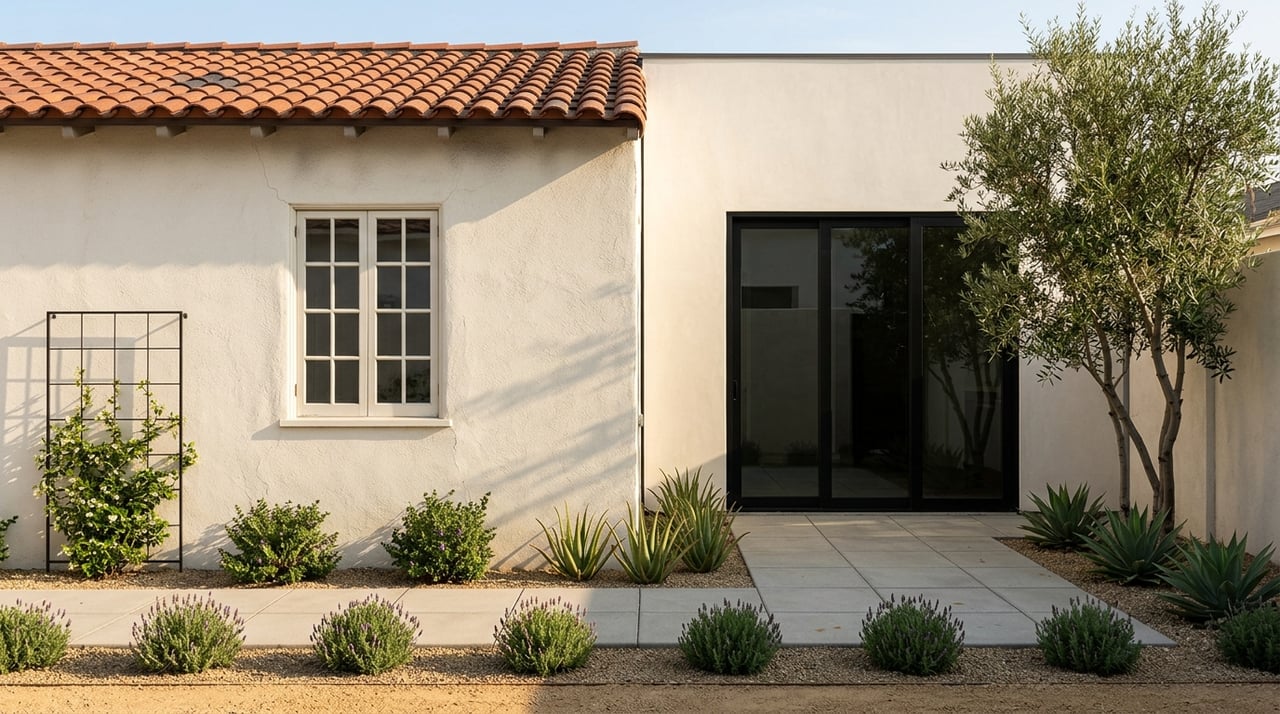
That means many buyers in Redlands are making a real apples-to-oranges decision. You may be comparing a Craftsman, bungalow, or Spanish-influenced property with a newer home built under a more current set of standards. In this market, the differences are not just cosmetic.
Redlands also has a strong preservation framework. The city has eight local historic districts, along with the Santa Fe Depot National Historic District and the Smiley Park National Historic District. The city’s updated Historic Architectural Design Guidelines, adopted in September 2024, identify common local styles such as Victorian, Queen Anne, Craftsman, Bungalow, Mission, Mediterranean, Spanish Colonial Revival, Colonial Revival, and more.
Historic homes in Redlands often stand out for their architectural identity. If you value original design details, mature streetscapes, and homes that feel distinct from one another, older properties can be very appealing. Redlands’ preservation approach is designed to protect that visual character over time.
The city’s design guidelines also show that modernization is possible. They include guidance for preservation, rehabilitation, restoration, reconstruction, accessibility, systems, sustainability, and additions. So if you love an older home but want modern function, that path may exist, just with more process and planning.
Another local factor is geography. The City’s Housing Element notes that many historic homes in the south area are protected to some extent by local historic districts, while North Redlands has many homes that are older than 50 years but no historic preservation districts. That can shape how much oversight you may face depending on where you buy.
The same city document also notes that many older homes are in better condition than their age might suggest because of owner investment and strong preservation policies. In other words, age alone does not tell you everything about condition.
For some buyers, one of the biggest advantages of a qualified historic property is the Mills Act program. The City of Redlands describes it as a statewide economic incentive for private owners of qualified historic buildings, tied to a required 10-year work plan.
The city says typical residential property tax savings for homes with a Mills Act contract in Redlands is around 60%. Eligible work often includes foundations, roofs, exterior siding and paint, windows, doors, porches, and code-required repairs such as knob-and-tube wiring.
That said, not every improvement is part of the work plan. The city notes that many interior cosmetic upgrades and system items like HVAC and insulation are usually not included. So the tax benefit can be meaningful, but it comes with preservation obligations and a structured long-term plan.
Character often comes with more moving parts. In Redlands, a Certificate of Appropriateness is required for proposed alterations, demolition, moving, or subdivision of a building or property already designated as a Historic Resource or Landmark. The city also states that demolition of any structure over 50 years old requires Historic and Scenic Preservation Commission approval, even if the property is not designated.
For you as a buyer, that can affect timelines and flexibility. If you are thinking about major exterior changes, a large addition, or a teardown-style project, you need to understand the review process before you close.
Older homes may also come with age-related issues that deserve closer inspection. The EPA states that renovation, repair, or painting in a pre-1978 home with lead-based paint can create dangerous lead dust, and it recommends using a lead-safe certified contractor when lead-based paint is suspected. The EPA also says testing is appropriate when buying or renovating a pre-1978 home if lead-based paint may be present.
Historic-home guidance from ASHI also points to issues such as knob-and-tube wiring and other legacy conditions. Older homes can also cost more to run, including potentially higher energy bills. That does not make them a bad choice, but it does mean you should go in with clear eyes.
Newer homes usually appeal to buyers who want a more current code baseline and a simpler update path. California HCD states that statewide residential building standards for new construction are found in Title 24, and the California Energy Commission updates the Building Energy Efficiency Standards every three years. The current 2025 standards take effect January 1, 2026.
In practical terms, newer homes are more likely to start with more current insulation, mechanical systems, and energy-related features than older homes were originally built with. That is not a guarantee of performance for every property, but it is a meaningful baseline difference.
Newer homes can also feel more straightforward if you plan to make changes after closing. The City of Redlands Building & Safety Division handles plan check and field inspections for additions, alterations, and demolitions, and the city’s permit portal lists common residential work such as remodels, roofing, HVAC changeouts, electrical panel upgrades, water heaters, solar, and plumbing permits.
If you want a move-in-ready home with a more predictable path for future work, that clarity can be a real advantage. You are less likely to run into preservation-related review on top of standard permitting.
Whether you buy historic or newer, a home inspection still matters. ASHI says a home inspection is an objective review from roof to foundation and typically covers heating, central air conditioning, plumbing, electrical, the roof, attic and insulation, walls, ceilings, floors, windows, doors, and structural components.
ASHI also notes that inspections are limited to visible and accessible areas. They are not municipal code-compliance inspections. That distinction matters, especially if you are comparing an older property to a newer one.
With a historic home, the goal is not to expect it to meet standards that did not exist when it was built. The goal is to understand its current condition, likely maintenance needs, and what future upgrades may involve. That mindset helps you compare options more fairly.
Before you move forward on a historic or older home in Redlands, it helps to confirm a few things early:
These questions can save you time, money, and frustration later.
Climate should also be part of your decision. NOAA monthly normals for nearby Ontario International Airport show average highs of 93.8°F in July and 94.9°F in August, with annual precipitation of 11.64 inches. While that is a nearby Inland Empire reference point rather than parcel-specific data, it helps explain why home performance matters in Redlands.
In both historic and newer homes, pay close attention to HVAC capacity, roof condition, exterior paint, insulation, and sun exposure. In a hot inland climate, these features can shape comfort and monthly costs more than buyers sometimes expect.
A historic home may be the better fit if you value architecture, original details, and the possibility of Mills Act tax savings. It can also make sense if you are comfortable with a more hands-on ownership experience and understand that updates may involve additional review.
A newer home may be the better fit if you want a more current construction baseline, fewer preservation constraints, and a more predictable path for remodeling. It can also be a smart choice if your priority is convenience, efficiency, and move-in-ready living.
Neither option is automatically better. The right choice depends on how you balance charm, flexibility, maintenance, tax considerations, and your long-term plans for the property.
For many buyers, the best next step is not just touring more homes. It is comparing homes through the lens of condition, likely future costs, and what changes you may want to make after purchase. That is where practical guidance can make a big difference.
If you want help weighing the tradeoffs between historic and newer homes in Redlands, Jeremy and Nhi Hubacek- can help you evaluate condition, renovation potential, and the real-world pros and cons before you make your move.
Stay up to date on the latest real estate trends.

We pride ourselves in providing personalized solutions that bring our clients closer to their dream properties and enhance their long-term wealth. Contact us today to discuss all your real estate needs!
THE HOME EXPERT GROUP
5053 LA MART DR STE 206 RIVERSIDE, CA 92507 Jeremy Hubacek | CA DRE# 02039207