Menifee Investment Property Guide to Value-Add Deals
February 19, 2026
February 19, 2026
Looking for flips or small rental plays in Menifee that pencil fast and sell even faster? You’re not alone. With average home values in the mid 500s and steady renter demand, Menifee can offer repeatable value-add opportunities if you know where to look and how to underwrite. In this guide, you’ll learn how to spot deal patterns, run quick math, plan realistic rehab scopes, and navigate permits so you can move with confidence. Let’s dive in.
Menifee’s average home value sits around the high 500s, which means typical after-repair values for updated single-family homes often land in the 500 to 650 thousand range depending on neighborhood and finish level. That price band creates a workable spread for cosmetic and mid-scope rehabs when you buy right and control timelines. Recent sales data points to healthy buyer activity for clean, move-in-ready homes.
On the rental side, Menifee average rents hover around $2,400 to $2,600 per month. Single-family rentals and ADUs often compete directly with apartment rents at similar price points, which helps support buy-and-hold strategies when acquisition and rehab costs are in line. Rents at this level can also make short-term holding through a flip viable if you need to bridge a longer permit or inspection timeline.
Population growth across Menifee since 2020 continues to support demand from buyers and renters. You can review housing and demographic context in the U.S. Census QuickFacts for Menifee. More people moving in and forming households equals steadier absorption for renovated homes and ADU rentals.
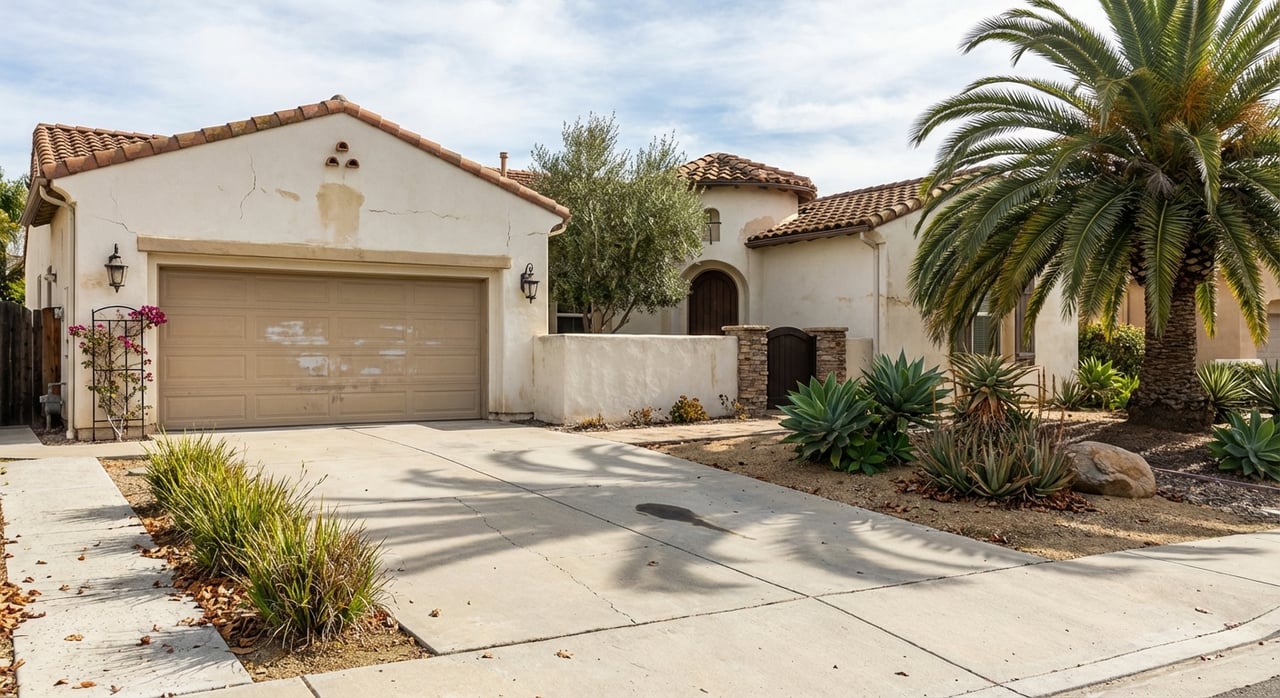
Many Menifee homes built in the 1990s to 2000s still carry original finishes. You’ll often see worn carpet, builder-grade kitchens, and older HVAC or water heaters. These properties respond well to tight cosmetic scopes that modernize kitchens and baths, refresh flooring and paint, and clean up curb appeal. They are common across trade-up subdivisions where owners delayed updates.
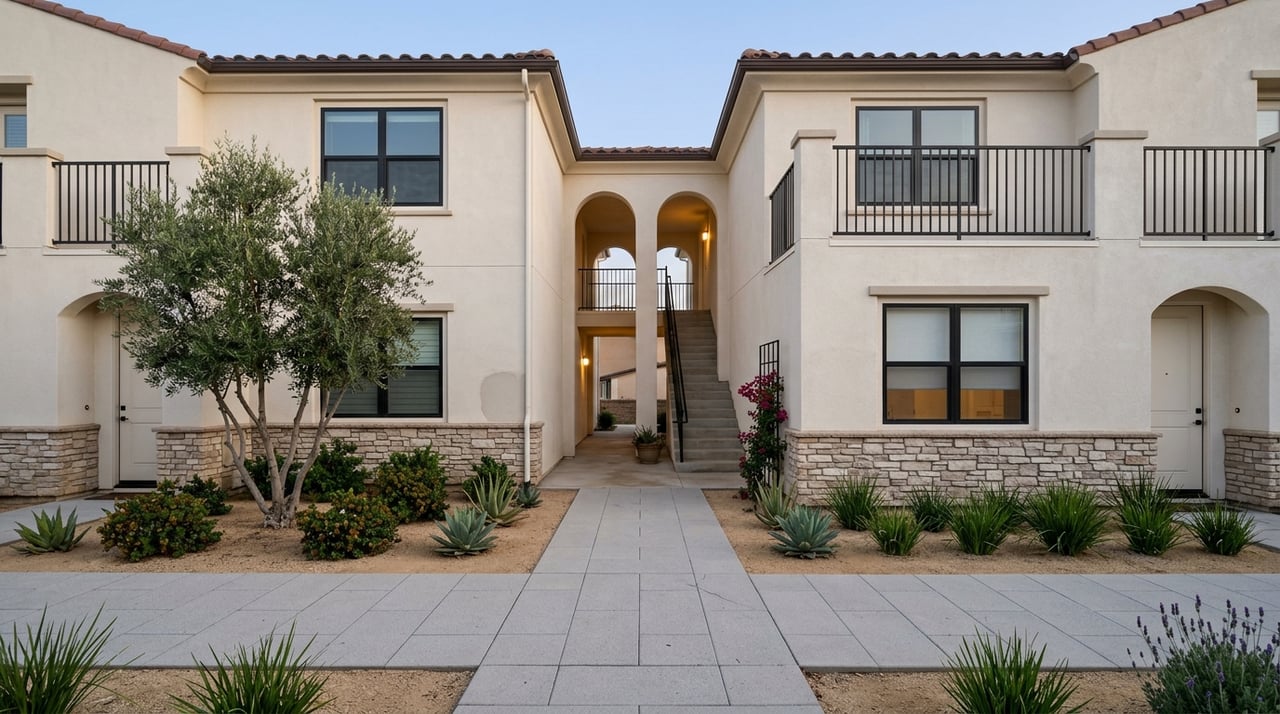
True duplex to fourplex inventory is limited but can be attractive when current rents trail market and you can raise income with kitchens, baths, HVAC, and lighting upgrades. A major local edge for income-add is Menifee’s Permit-Ready ADU program. Pre-reviewed plan sets can shorten design and plan-check time for detached ADUs, turning underused yard space into an additional income stream when the lot and utilities cooperate.
Use local bids to finalize budgets, but these bands are a practical starting point:
For national timeline and cost context, review This Old House remodeling trends. Always add a 10 to 20 percent contingency, especially on older systems or when opening walls.
Menifee runs a digital permit center where you can submit plans and schedule inspections online. Start with the city’s Virtual City Hall permit center to verify submittal requirements and inspection timelines. If an ADU is part of your plan, lean on the Permit-Ready ADU program and the city’s post-entitlement checklists to speed plan-check. A quick pre-submittal call with a permit technician can prevent resubmittals and delays.
Many newer Menifee neighborhoods sit inside Community Facilities Districts. These CFD or Mello-Roos assessments show up on the property tax bill and add to monthly carrying costs. Before you make an offer, check the most recent tax bill and HOA disclosures for special taxes. You can review the county’s framework in the Riverside County ordinance covering Mello-Roos mechanisms. Your lender will include these assessments in debt-to-income calculations, so they matter for both flips and holds.
California’s Tenant Protection Act, AB 1482, caps most rent increases to the lower of 10 percent or 5 percent plus CPI over any 12-month period, and it applies just-cause eviction rules after 12 months of tenancy. These protections affect buy-and-hold upside and renovation timelines if units are occupied. Review the AB 1482 guidance from the California Attorney General and confirm whether a specific property or ADU is exempt before underwriting aggressive rent growth.
Flip vs hold note: CFDs raise carrying costs, and AB 1482 limits rent growth on most units, so confirm these two items early. If your hold math is tight, you may be better off flipping an updated SFR where resale demand is strong.
A fast way to set a Maximum Allowable Offer for a flip is the 70 percent rule: MAO equals After Repair Value times 0.70 minus estimated rehab. It is a rule of thumb, not a contract price, but it helps you screen. If your target ARV is 620,000 and your rehab budget is 60,000, then MAO equals 620,000 times 0.70 minus 60,000, or 434,000 minus 60,000, which is 374,000. Compare this to list price, add closing and selling costs, and adjust for local fees like permits, transfer taxes, and possible HOA dues. For more detail, see BiggerPockets on the 70 percent rule.
Let’s say a dated 3-bed SFR will sell for 620,000 after a mid-scope rehab. Your contractor bids 60,000, and you expect an 8-week timeline.
You do not need to guess at costs, permits, or resale strategy. With contractor-grade budgeting, practical scope planning, and strong local comps, you can move from first look to profitable exit with confidence. If you want help zeroing in on deals, building accurate bids, navigating Menifee permits, and positioning the finished product to sell fast, we are here to help. Schedule a free consultation with Jeremy and Nhi Hubacek to map your next move.
Stay up to date on the latest real estate trends.
We pride ourselves in providing personalized solutions that bring our clients closer to their dream properties and enhance their long-term wealth. Contact us today to discuss all your real estate needs!
THE HOME EXPERT GROUP
5053 LA MART DR STE 206 RIVERSIDE, CA 92507 Jeremy Hubacek | CA DRE# 02039207