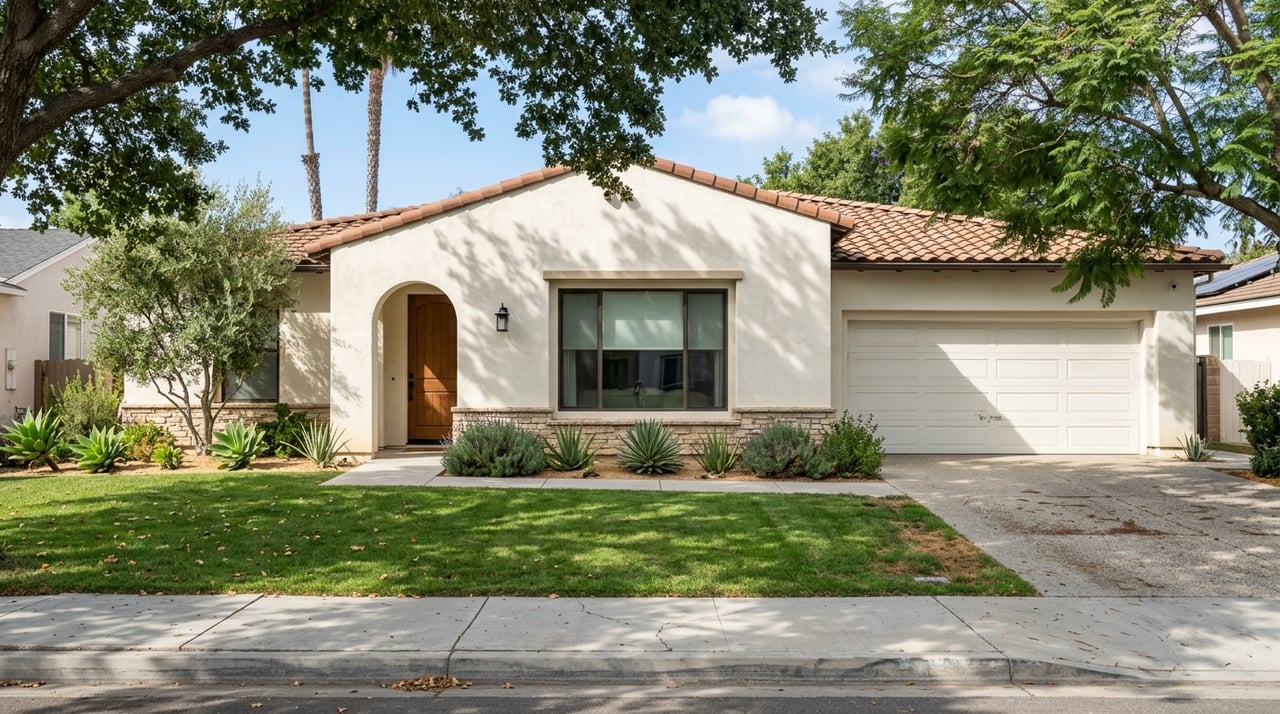
Fontana Neighborhoods Comparison for Newer vs Established Areas
July 2, 2026
July 2, 2026
If you are torn between a newer Fontana neighborhood and a more established one, you are asking the right question. In Fontana, that choice can affect your budget, home style, monthly costs, and even how much future construction you may see around you. The good news is that Fontana gives you real variety, and once you know what to compare, the decision gets much clearer. Let’s dive in.
A lot of buyers assume Fontana splits neatly into brand-new neighborhoods and older ones. In reality, the city’s housing stock is more mixed than that. Regional and city housing data show that while some homes were built before 1970 or 1980, a large share of Fontana housing was built after 1970, with many owner-occupied homes dating from the 1980s and 1990s.
That means many “established” Fontana neighborhoods are not historic in the traditional sense. They are often late-1980s and 1990s subdivisions with more mature streets and a settled feel. For many buyers, the better framework is three buckets: 2020s communities still being built, 2000s to early-2010s neighborhoods, and 1980s to 1990s established tracts.
In Fontana, newer neighborhoods are heavily concentrated in the north and northwest parts of the city. The city’s current residential development list includes communities such as Shady Trails PA16, Summit at Rosena, Arboretum, Ventana, Monterado, Monarch Hills, and Mountain View Homes. These areas are not all the same product type, which is important if you want flexibility.
You will find a mix of condos, townhomes, detached homes, and mixed-use concepts. That can make newer Fontana appealing if you want modern layouts or a lower-maintenance option. It also means you should compare each tract closely instead of assuming every new area offers the same lifestyle.
Many newer north Fontana communities are built around planned amenities. Shady Trails PA16 is planned for 139 condominiums, while Summit at Rosena is planned for more than 850 housing units plus an Olympic-sized pool in a community-center area. Arboretum is planned for 3,526 units with parks, gardens, and trails.
If community features matter to you, that can be a major advantage. Newer specific-plan areas often include parks, walking paths, open space, and nearby retail or mixed-use features. Buyers who want a more planned environment often find that appealing.
Sample newer listings in places like Sierra Lakes and North Fontana show traits many buyers look for today, including open floor plans, lofts, and flexible bedroom counts. One Sierra Lakes example includes 2,749 square feet on a 6,067-square-foot lot, while another includes a loft layout. A North Fontana condo listing in Narra Hills shows resort-style amenities and a monthly HOA.
Of course, that does not mean every newer home will look the same. Still, if your wish list includes open-concept living, larger gathering spaces, or newer finishes, north Fontana communities may give you more options to explore.
One of the biggest buyer questions is whether newer neighborhoods mean higher HOA fees. Sometimes yes, but not always. Current examples in the research show about $299 to $300 per month in Shady Trails, around $260 in Narra Hills, and no HOA in some Sierra Lakes detached homes.
That range matters. If you love amenity-rich neighborhoods, you may be comfortable with monthly dues. If you prefer to keep fixed costs lower, you will want to compare tract by tract and not assume every newer neighborhood has the same fee structure.
Established Fontana neighborhoods often give you a more settled environment. Southridge Village is one of the clearest examples. The city says the Southridge Village Specific Plan covers 2,640 acres, is primarily single-family with some multifamily, and includes commercial centers, a fire station, Jurupa Regional Park, and seven schools within the broader project area adopted in 1981.
For buyers, that usually translates into a neighborhood that feels more rooted and predictable. You are often looking at streets, parks, and commercial areas that have been in place for years rather than areas still being shaped by ongoing construction.
Current Southridge listings help show what buyers may encounter in an established area. Examples in the research include a 1987 home with 1,258 square feet on a roughly 3,600-square-foot lot and a 1996 home with 1,750 square feet on a 4,965-square-foot lot. One current single-family listing also shows no HOA fees.
That does not make Southridge better or worse than a newer tract. It simply means the tradeoffs are different. You may find older construction, a more mature street pattern, and potentially fewer mandatory amenity costs.
California Landings is a strong example of Fontana’s middle ground. The city approved the specific plan in 1994 with 750 lots, minimum lot sizes from 5,000 to 7,200 square feet, plus 10,000-square-foot out-parcels, an elementary school, and a neighborhood park. Current homes there include 1999 and 2003 builds on lots ranging from 6,067 to 8,125 square feet.
This is why buyers should avoid thinking in extremes. An established Fontana neighborhood does not always mean tiny lots or outdated layouts. In many cases, late-1990s and early-2000s neighborhoods can still offer generous yards and practical floor plans.
Market snapshots in the research suggest a price ladder across Fontana neighborhoods. Southridge Village averages about $590,861, California Landings shows a median sale price around $611,000, Sierra Lakes averages about $739,391, and Summit Heights averages about $809,540.
These are snapshots, not fixed rules. Still, they help show a pattern many buyers notice in real life. Newer north-side communities often come at a premium compared with more established southern tracts.
If you are balancing monthly payment against home age and amenities, this is where your decision often becomes clearer. You may decide a settled area gives you better budget flexibility, or you may decide the premium for newer construction and community features is worth it for your lifestyle.
Fontana has more than 40 parks, sports facilities, and community centers, so both newer and established areas have access to community amenities. South Fontana includes places like Southridge Park, Jurupa Hills Regional Park, and the Don Day Center. North Fontana includes Sierra Crest Park, North Heritage Park, and Coyote Canyon Park.
The feel can still be different depending on where you buy. Established south-side areas often feel more integrated into the city’s existing fabric, while newer north and northwest areas often feel more planned and amenity-forward.
Several north-area communities are designed around lifestyle features. Sierra Lakes includes an 18-hole golf course, commercial uses, a school site, and pedestrian and bicycle paths. Summit at Rosena centers on Edison Trails Park with walking and bike paths and exercise stations.
Ventana is designed as a mixed-use concept near I-15 with retail, office, restaurants, and other commercial uses. Coyote Canyon includes trails and open space that connect toward the regional trail system and Hunter’s Ridge Wilderness Park. If you want a neighborhood with a planned-community feel, these examples stand out.
Established south-side areas can appeal to buyers who want a neighborhood where much of the surrounding development is already in place. That may mean fewer questions about future build-out, traffic changes tied to new phases, or nearby construction timelines. For some buyers, that predictability matters just as much as the home itself.
If you want a more settled street pattern and less emphasis on newer community packages, Southridge-style neighborhoods may feel like a better fit. If you want newer systems and more community amenities, the north side may pull ahead.
The biggest mistake buyers make is comparing only by neighborhood name. In Fontana, it makes more sense to compare by tract, era, and monthly cost structure. Two neighborhoods that seem similar at first glance can differ quite a bit in lot size, HOA dues, and surrounding amenities.
A practical comparison checklist includes:
This kind of side-by-side review can help you avoid overpaying for features you do not need, or passing on a neighborhood that actually fits you well.
If you want newer layouts, planned amenities, and a stronger chance of open-concept design, newer north and northwest Fontana may be the better match. If you want a more established setting, potentially lower mandatory costs, and a neighborhood that already feels settled, established areas like Southridge may be worth a closer look.
If you want something between those two poles, California Landings and Sierra Lakes often serve as useful middle-ground options. That is why many Fontana buyers benefit from looking beyond a simple newer-versus-established label. The best fit usually comes down to your budget, your preferred lifestyle, and how much value you place on amenities versus maturity.
When you are comparing homes in Fontana, it helps to have someone who can look beyond the photos and talk through layout, lot utility, condition, and long-term value in practical terms. If you want help narrowing down the right fit, reach out to Jeremy and Nhi Hubacek- for a free consultation.
Stay up to date on the latest real estate trends.

We pride ourselves in providing personalized solutions that bring our clients closer to their dream properties and enhance their long-term wealth. Contact us today to discuss all your real estate needs!
THE HOME EXPERT GROUP
5053 LA MART DR STE 206 RIVERSIDE, CA 92507 Jeremy Hubacek | CA DRE# 02039207